
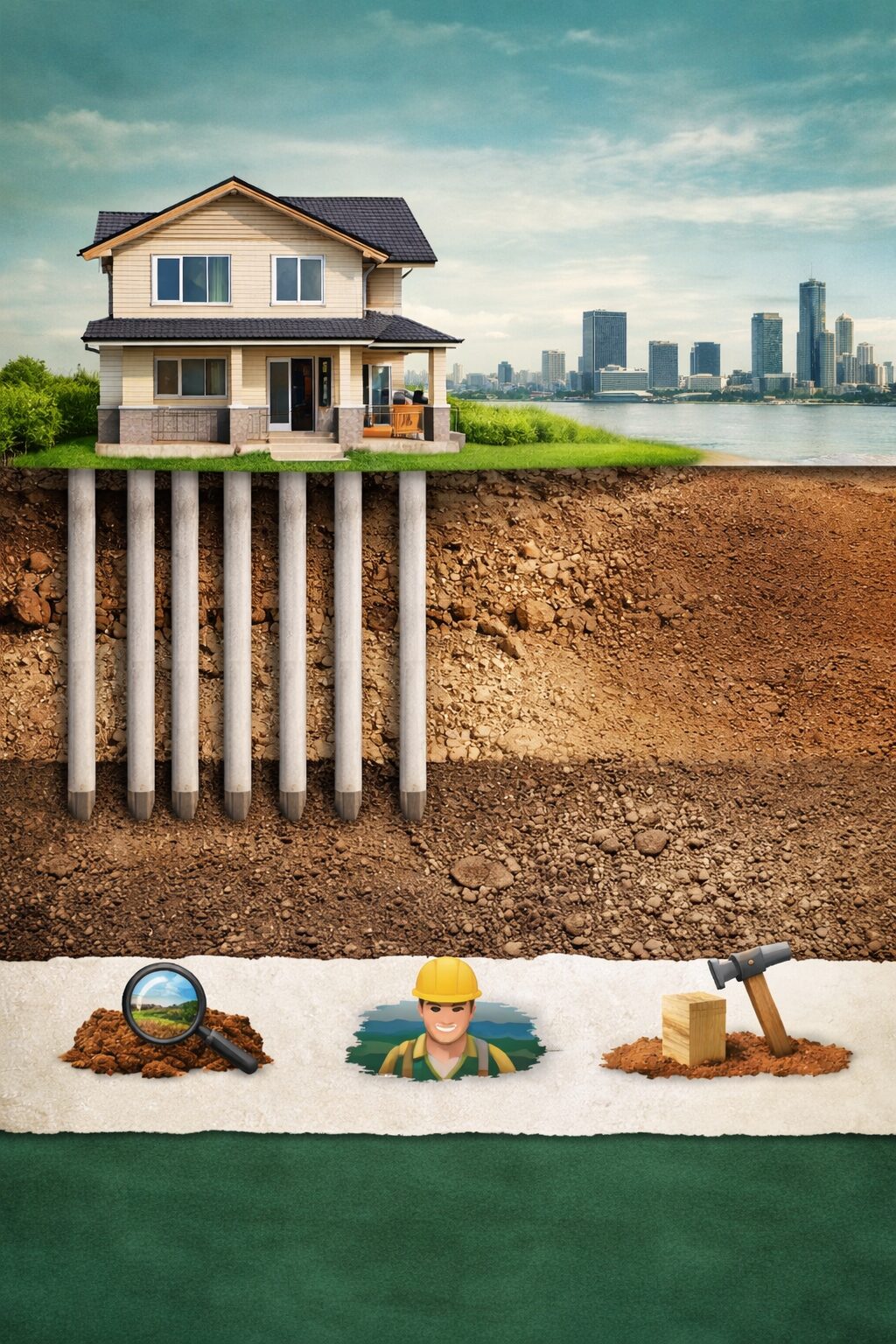

Before building a house or any big structure, it’s very important to check if the soil is strong. In some cities in Nigeria, like Lagos and Port Harcourt, the ground is soft or made from filled-in land. If a building is put on soft ground without strong support, it can sink, crack, or fall down. That’s why builders use piles and deep foundations. These are like super-strong legs that go deep into the ground until they reach hard soil or rock, so the building stays safe and steady.
Deep foundations come in different types, like piles, caissons, or drilled shafts. They are used for tall buildings, bridges, or factories. They keep structures stable even when the top soil is weak, wet, or moving. Without them, buildings might tilt, crack, or get damaged, which can be very expensive to fix.
Before putting in deep foundations, engineers check the ground carefully. They dig or drill small holes to see how deep the hard soil is and choose the right kind of support. Then, they carefully put the piles or foundations in place, making sure everything is strong and straight so the building will be safe for a long time.
How Piling and Deep Foundations Work
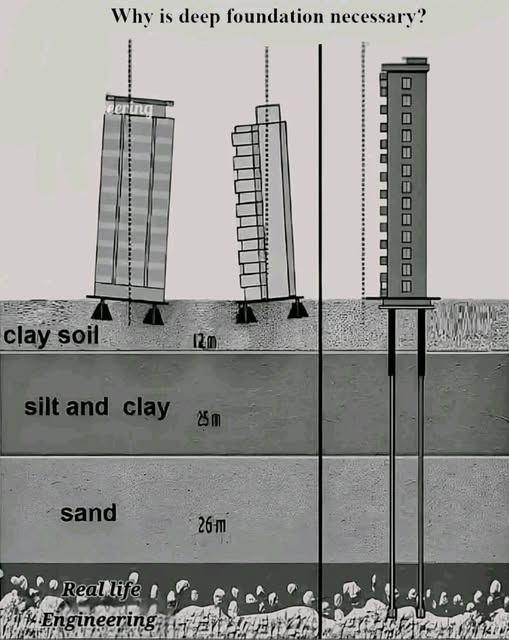
Piles are long, thin posts made of concrete, steel, or wood that are pushed or drilled deep into the ground until they reach strong soil or rock. They help hold up a building by carrying its weight down to the solid ground. Some piles sit on strong layers of soil or rock at the bottom (called end-bearing piles), while others get support from the soil along their sides (called friction piles).
Deep foundations also help keep buildings safe from problems like floods, soil washing away, or soft ground that can sink. They are very useful in places with soft clay, loose sand, or land that was filled in. Sometimes, engineers use extra methods like pile caps or mat foundations to spread the building’s weight evenly and stop it from sinking.
Using piles and deep foundations is like giving a building strong legs that go down to solid ground. This makes sure it doesn’t tilt, sink, or crack, even if the top soil is soft or sandy. Builders also check the ground first to know how deep the piles need to go and which type will work best.
By using these strong foundations, homes, schools, bridges, and tall buildings in cities can stay safe for many years. It may cost a bit more at first, but it is much better than fixing cracks or damages later.
Final Tips
Building on soft or weak soil in Nigeria, like in Lagos or Port Harcourt, can be risky if you don’t use deep foundations. Piling and deep foundations help transfer a building’s weight to stronger soil or rock beneath, keeping it safe and stable.
To do this right, check your soil early, hire skilled engineers, choose the right type of pile, and monitor construction closely. Fr more tips and to find verified builders, visit MyPlace.ng. While it may cost more upfront, investing in deep foundations prevents cracks, sinking, and long-term damage, giving you a strong, secure building for years to come.





Leave Your Comment