
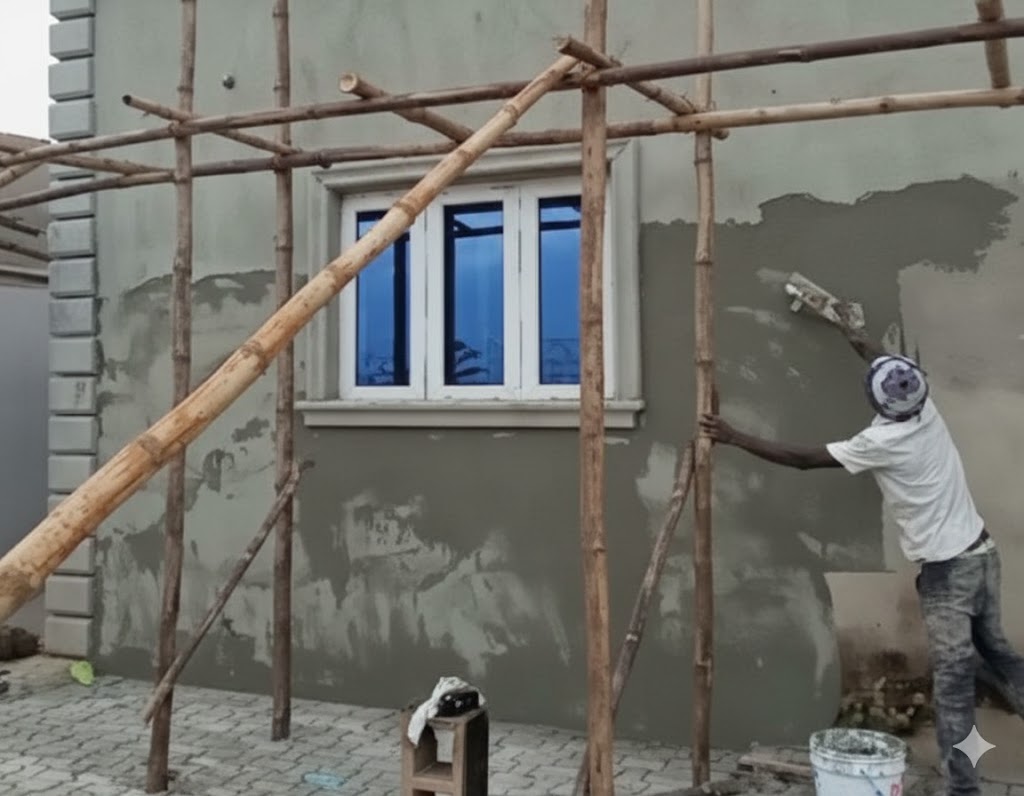

In many Nigerian building projects like residential houses, shops, and office buildings, it is common to see walls begin to crack, peel, or show damp patches shortly after completion. This usually happens when wall screeding is skipped entirely in an effort to reduce construction costs. What appears to be a small savings at the early stage can lead to frequent repainting, repairs, and long-term structural damage.
For example, a typical two-bedroom bungalow in areas like Lagos, Benin City, or Warri may look well-finished immediately after painting. However, within one or two rainy seasons, uneven paint patches, wall stains, and surface cracks begin to appear. In most cases, the problem is not the paint but the absence of proper wall screeding to seal the blockwork and protect the wall from moisture penetration.
Wall screeding is therefore a vital construction process that transforms rough block walls into smooth, strong, and durable surfaces. It involves applying a cement-based plaster layer that corrects surface imperfections, improves wall strength, and prepares the wall for paint, tiles, or decorative finishes. In Nigeria’s climate proper wall screeding is essential for protecting buildings and ensuring they remain neat and structurally sound for many years.
The following points explain why wall screeding is necessary and why it should never be skipped in any quality building project:

Creates Smooth and Even Wall Surfaces
Blocks and bricks used in construction are rarely laid in perfect alignment, no matter how skilled the mason is. As a result, walls often have rough patches, protrusions, gaps, and uneven joints. Wall screeding corrects these imperfections by filling in gaps and leveling out the surface, creating a flat and uniform wall. This smooth base is essential for achieving a professional finish, as it allows paint, tiles, wallpapers, or decorative panels to sit properly without visible flaws or distortions. Without screeding, even high-quality finishes will highlight wall defects instead of hiding them.
Improves Wall Strength and Durability
Wall screeding adds an extra layer of protection to the blockwork, helping the wall withstand daily wear, minor impacts, and environmental stress. This protective layer reinforces the wall surface and reduces direct exposure of blocks to weather conditions such as heat, rain, and humidity. Over time, screeded walls are less likely to develop surface cracks or erosion, making them stronger and more durable. This is especially important in high-traffic areas like corridors, staircases, offices, shops, and exterior walls that face constant exposure.
Enhances Paint and Finishing Quality
Paint and other wall finishes perform best on properly screeded surfaces. Screeding improves paint adhesion, allowing the paint to spread evenly and bond well with the wall. This prevents issues such as patchy colours, peeling paint, or early fading. Unscreeded walls often absorb paint unevenly, leading to higher paint consumption and increased costs. With proper wall screeding, finishes appear smoother, brighter, and more consistent, enhancing the aesthetic value of the building.
Protects Walls from Moisture and Dampness
One of the most important functions of wall screeding is moisture protection. Screeding helps seal the pores in blockwork, reducing water penetration and dampness. When walls are not properly screeded, moisture can seep in, leading to mold growth, wall stains, peeling paint, and unpleasant odors. This protection is especially critical in areas such as kitchens, bathrooms, basements, and external walls that are frequently exposed to water or humidity. In Nigeria’s climate, proper wall screeding plays a major role in preventing moisture-related building damage.
Improves Thermal and Acoustic Comfort
Well-screeded walls help reduce air gaps and surface openings that allow heat, cold, and noise to pass through. By sealing these gaps, wall screeding contributes to better indoor temperature regulation, keeping rooms cooler during hot weather and warmer when temperatures drop. It also helps reduce noise transmission between rooms and from outside, improving acoustic comfort. This makes living and working spaces more comfortable in both residential and commercial buildings.
Final Tip
Always use experienced artisans for wall screeding to ensure proper alignment and a smooth, professional finish, and allow the walls to cure adequately before painting or applying any decorative finishes. Using quality materials with the correct mix ratio helps prevent shrinkage, cracking, and early surface failure, while special attention should be given to wet areas and external walls to improve moisture resistance. At myplace.ng, we believe quality construction is reflected in the details, and wall screeding is not just about appearance; it is a vital process that protects your investment and keeps your building strong, neat, and durable for many years to come.


Leave Your Comment